Sunday, 23 October 2011

The Allure of the Alcázar


The charm of Seville, Andalusia’s sunny capital, lies in its exquisite Moorish architecture- cobbled streets lined with graceful ogee arches, ceramic murals, and vivid, vivid colour. It’s the first thing that hits you as you arrive into the city, besides the tangy aroma of ripened oranges and the intense heat (yes, even in October- I am seriously considering emigrating). To truly appreciate this exquisite mudéjar architecture, you must visit the Alcázar, an extravagant royal palace that crowns the heart of the city. Sprawled alongside the magnificent cathedral, this is an endlessly unfolding treasure trove of opulent patios and courtyards within courtyards that transport you back in time. Originally a Moorish fortress built in the 10th century, the present-day Alcázar boasts Gothic, Baroque and Renaissance ingredients added over the centuries by various royal decrees. Huge would be an understatement- it is unbelievably vast, a labyrinthine network of different cultural influences, almost a city in itself. We definitely did not leave ourselves enough time to cover the whole palace- an entire day could easily be passed just wandering the stunning pavilions and sumptuous, sunken gardens. This is a palace in a truly legendary sense- no surprises, then, that it doubled as the King of Jerusalem's court in the Ridley Scott film Kingdom of Heaven. Don’t let the long queues put you off- Seville may be famous for its fiery flamenco, but a trip to the city really is incomplete without stepping through the palace’s main Lion’s Gate into Spain’s rich Moorish past.

Monday, 17 October 2011

Seville's Secret


Somewhere lost within the charming maze of Santa Cruz in the Andalusian city of Seville is La Carboneria, the only place in this beautiful city to enjoy flamenco for free. Sultry and enthralling, this emotional dance undoubtedly captures the native heart and soul of this region of Spain- an absolute must-see for any visitor. At first, this little flamenco bar seemed typically local: old men quietly playing chequers, heavy cigar smoke suspended in the air. Yet the dynamic world of flamenco beckoned through an interior wooden door, an animated atmosphere of pure flamenco passion. Sure, when we turned up the bar was rammed with tourists (try not to go on a Saturday night), but even this could not spoil the spectacle. Instead, just one dancer, one singer, and one guitarist effortlessly mesmerized the room. Proudly expressive, the dancer elegantly conjured flamenco magic- incredible to watch with her colourful dress and strict percussive movements. Not to be outdone, the accompanying vocalist’s metrical palmas (handclaps) rhythmically placed a spell on the audience- his afillá, or singing voice, pure honey for the ear with its distinctive earthy quality. Alongside the bright, sharp tones of the flamenco guitar, this was an enchantingly understated performance. The bar, as stifling hot as the fire of the flamenco dance itself, could perhaps have benefitted from some air conditioning, but with reasonably-priced drinks (a pitcher of sangria cost only 9 euros), and an atmosphere humming with anticipation, this was easily forgotten. Be warned, however: La Carboneria is so discreet its entrance doesn’t even bear a name, and in the labyrinth of Santa Cruz, it is very likely you will get lost trying to find Calle Levíes. When this happens, keep searching. This is Spain as Hemingway knew it: a passionate, unspoiled heartland doggedly clinging to the rich traditions of its past. Informal yet captivating, La Carboneria’s flamenco is Seville’s little secret. 

Tuesday, 11 October 2011

The simple pleasure of chocolate


Chocolate honestly cannot get any better than here at Chocolateria Valor, a cosy little cafe off Salamanca’s Rua Mayor. As you walk in the door, the warm aroma of freshly made chocolate wraps itself around you so hard it practically gives you a welcoming hug. From that moment on, there’s really no turning back- I am no avid chocolate lover, but even I was instantly seduced (the giant chocolate pictures plastered across the walls certainly didn’t help). We came here with one goal in mind: chocolate con churros (a lucky decision- taking a peek at the delicious menu would probably have been disastrous for both purse and waistline). Churros- sort of like an unfurled Spanish doughnut- are traditionally eaten for breakfast dipped in hot chocolate (or sometimes sprinkled with sugar, another recommended option). Valor’s reputation for churros precedes it- and it certainly did not disappoint. The chocolate was beautifully rich, so velvety we didn’t so much dip our churros but rather completely immersed them. I would have plunged my head in there if the cup hadn’t been so damn small. Master chocolatiers since 1881, this is one company that has gracefully perfected the art of making chocolate- perfect as Valor has cafes in most Spanish cities, spreading the chocolate love. Two churros and a cup of pure chocolate later, we were feeling extremely guilty. Yet just when we thought we couldn’t possibly eat anymore, they had cleverly placed the chocolate shop by the entrance- making it almost impossible to leave without perusing the delicately crafted chocolate selection. It’s a stroke of genius really, given that those who walk in here are unlikely to possess so much as an inch of willpower. This is not a cafe for those watching their waistline- the tempting menu offers chocolate delicacies from the widely-popular brownie and a ridiculous variation on chocolate icecream, to Yumbé specialities for those finer connoisseurs (chocolate maya and chocolate Aztec drinks crafted from truly exquisite cocoa looked the most appealing). Visit Valor and just surrender- there’s a reason why chocolate’s scientific name, Theobroma cacao, means food of the gods.  

Sunday, 9 October 2011

Chez Victor


Tucked away in the long shadow of the majestic San Esteban convent in Salamanca sits the unassuming restaurant Victor Gutiérrez, Michelin-starred and arguably home to the best food in the city. Named after the chef Víctor Manuel Gutiérrez Vallès, each dish is a gastronomic masterpiece- a distinct fusion of Peruvian hints exquisitely enriched by Spanish, Chinese and Japanese textures. We sampled the tasting menu, a decision that really should be made only by those with a very confident appetite, particularly given the constant stream of delicious freshly-baked bread rolls (raisin, onion or plain white) served alongside fine Incan spices in olive oil. Three bread rolls later, and I was in serious danger of being full before the proper tasting had even got under way. First on the menu, a finely-carved roast beef that was elegantly offset by a piquant Peruvian flavour. Next, squid ink risotto with wafer-thin tuna slices so hot they actually moved, somewhat unnerving but easily overcome by just feigning ignorance and digging in. The delicate fillet of cod that then followed was so flawlessly cooked it was like some kind of Peruvian fiesta for the mouth. Finally, the pièce-de-resistance: the best roast cuchinello I've ever tasted with a perfectly crispy skin, a real speciality in this region of Spain. By the time it came for dessert, we could barely breathe, let alone move (I made the mistake of wearing a tightly-belted dress, definitely won’t be making that rookie error again) – but with not one, but two dessert dishes, this was one tasting menu that still had more tricks up its sleeve. Thankfully, the rich chocolate brownie was ingeniously placed on a bed of mango sauce so felt less heavy than it looked (what a relief after the banquet we'd just consumed...); whilst the crisply-cut apple wedges artistically embedded in melon ice cream served to neatly cleanse the palate. We accompanied the meal with a Cambrico red wine, a speciality in this Castilla y Leon region with its complex aroma of raspberries, blackberries and liquorice that neatly counterbalanced the menu’s rich flavours. With a mere ten sittings at any one time, this was a quietly intimate dining experience- the room's blank walls and just three impeccable waitresses adding to the restaurant's refreshingly unpretentious atmosphere. At 80 a head for the tasting menu, this is perhaps a restaurant to visit for a special occasion- but I promise it's an outstanding culinary experience that is worth every last cent.

Monday, 26 September 2011

Absolut Salamanca


Welcome to La Chupiteria. At one euro a shot, this is the indisputable starting point for a great night out in Salamanca, the defining place where salamantinos and students alike gather first- shot glasses lined up along the bar ready to unlock the evening’s potential. Don’t arrive here expecting a chic glass of wine or a traditional pint- instead, La Chupiteria exclusively serves chupitos- and lots and lots of them. The menu (if you can call it that, in truth it’s more a roll call that spells disaster) does not disappoint. From tequila and whisky to rum and absinthe, just name it and there’ll be some potent cocktail that is guaranteed to burn your throat and/or delete your memory. Sure, the floors are revoltingly sticky so perhaps wear some stubborn shoes (mine fought a losing battle with the dancefloor) and the iconic neon signs are painfully tacky, yet this is the absolute hub of Salamancan nightlife- the proper life and soul of the fiesta. La Chupiteria may be tiny, but the bartenders are a laugh, the trashy music is so Eurotastic that it would be useless to fight it, and the party atmosphere is always loud and infectious. Begin the night here, and you’re certain to enjoy a good time in Salamanca. Some tried-and-tested advice: if you really want your night to end with a blank, order the Diablo Verde. Turns out it’s not named after the devil for nothing. 

Wednesday, 14 September 2011

Ready to Fiesta


So, here I am in Salamanca. Completely off-the-beaten-track, this city may be small and cobbled, but what it lacks in proportion it most definitely makes up for in pure, plucky spirit. Before I arrived in the city (for the next few months, I will recklessly put my embarrassingly rusty Spanish skills to the test at language school), I knew Salamanca only as the birthplace of castellaño, the “purest” spoken Spanish, and as the home to the Western world’s third oldest university. Interesting facts perhaps, but hardly gems that have tourists reaching for their passports. Yet Salamanca does not disappoint. By a complete stroke of luck, I have arrived during what Salamantinos call Las Ferias y Fiestas- a selection of cultural events, concerts and fascinating spectacles that celebrate the city’s patron saint Santa María de la Vega between the 7th and 15th of September. By night, the main square in the city’s absolute heart, La Plaza Mayor, lights up as various acts take to a vast stage and play long into the evening. Last night, the (apparently) internationally-renowned DJ Carlos Jean played to a packed square that seemed to descend into a bit of an outdoor rave, with locals, students and tourist alike all dancing with abandon. Admittedly, this Carlos Jean didn’t seem to do very much- if interspersing a few chart hits by the likes of Rihanna with some remixed classics such as Blur’s Song 2 counts as DJ-ing, then anyone can be a Fat Boy Slim- yet the crowd definitely appreciated it, going wild until the square pulsated with an infectious energy. Throw in a couple of huge dancing lego robots (genuinely), a few cañas and some vibrant lasers, and Salamanca had a proper fiesta. Every street has a tiny something to offer, from stalls selling Spanish tapas called pinchos (at about 1.80 for a pincho and two drinks, you’re laughing) to La Corrida del Toros at the city’s edge, a traditional spectacle that I have yet to brave. This fascinating little city may still be fairly new to me, but already I can see why it is a popular university in Spain- the fiestas just don’t stop, and even during the afternoon various concerts resound within the packed Plaza Mayor. So, if you are ever interested in visiting this esoteric city, then September is undoubtedly the time to come- just be prepared to fight your way through throbbing streets.


Sunday, 4 September 2011

Riding out the storm

As the serpentine Lord Voldemort, Ralph Fiennes proved he can brandish a wand with malicious intent. Now, as he steps into the shoes of one of the literary grandfathers of nuanced magic, Shakespeare’s Prospero, it’s clear that Fiennes can summon up even greater powers. Headlining Trevor Nunn’s strictly-limited run of The Tempest, he quietly commands the stage- delivering Prospero’s rich monologues with a brilliantly subtle conviction. It’s not an overstated performance, as the character of Prospero tends to be with all its emphasis on magic and vengeance, and I think it works well within Nunn’s somewhat anachronistic approach to the play’s staging. This is a production that relies less on a hi-tech bag of tricks to create illusion than on aerial pulleys upon which acrobatic cast members pivot and fly above the stage- an unusual throwback to an Elizabethan system of wires and winches that is refreshing in our technological age. Yet although Nunn’s play is grounded in tradition, I felt the opening tempest itself was disappointingly unconvincing- as if the sound effect box was at its lowest volume. Given that this is the eponymous tempest, it was not nearly dramatic enough and, in my opinion, a hugely imbalanced spectacle. Quieter moments could have benefitted from a few better-timed violent thunderclaps, whilst the ones that did boom and crash served only to drown out some of the script’s key lines. The projection of moving waves, with the actors acrobatically spinning in tandem behind, seemed a bit flat- imaginative circus acts may be entertaining, but they do not whip up a credible storm. Later, the visionary dogs that hound Stephano, Trinculo and Caliban seemed almost laughable as cast members pounced onstage on all fours-another instance when a bit of CGI wouldn’t have gone amiss. The age-old problem with Shakespeare is how difficult it is to be inventive- and I felt that Nunn lacked fresh inspiration. Technology aside, though, Nunn returns to the kernel of reconciliation and amnesty at the play’s heart- in its own way, this is what is truly refreshing about the production. Prospero is, above all, the father to Miranda- and much is made of this raw human relationship, a thoroughly modern take on what is essentially a wronged single parent preparing to relinquish his only child to a restorative marriage. The other cast members brilliantly help to weave this very human element. Nicholas Lyndhurst, aka Rodney from Only Fools and Horses, gets second billing as the hapless court jester Trinculo. Although odd that this role should be made so prominent, given that he has so few lines, Lyndhurst’s comic timing is spot on, especially when paired with the inebriated Stephano. Tom Byam Shaw does a sprightly, if somewhat camp, turn as the spirit Ariel (I couldn't help being reminded strongly of Zoolander). A little controversially, but perhaps not surprisingly, Nunn has exploited the play’s central colonialist theme too, casting the play’s only black actor Giles Terera as the enslaved Caliban. It’s a brave move but one that works- Terera performs the role of the bitterly tormented monster with moving pathos and, although he is supposedly “misshapen”, his six-pack looked just fine from where I was sitting. For all this great acting, though, when Prospero finally delivers the well-known epilogue, it’s welcome relief from a play that does tend to drag its feet. Fiennes powerfully begs our indulgence and, as he slowly exits the bare stage through a simple wooden door, it’s clear that this is the calm after the storm. The chance to see the magnificent Fiennes onstage is rare- so if you can get tickets for this extremely limited season, then do. Sadly, though, this production doesn’t quite conjure up modern magic, even with Voldemort in its midst. 

Saturday, 3 September 2011

Digital Dining

As a self-confessed foodie, the concept behind Inamo, the futuristic restaurant on Regent Street, seemed too good to resist. Here was an interactive dinner invitation- instead of crisply tailored waiters, the table and menu  are electronic- with an image of each dish projected onto your clean white plate from above. At the click of a button, your order is placed. Minutes later, a waiter materialises from nowhere to serve your food before quietly retreating. No fuss, no embarrassing arm waves to grab the waiter’s attention- just pure restaurant magic. Sure, the whole dining experience is reduced to being somewhat impersonal, and our silent waiter didn’t really merit a large tip, but who really cares when you can play battleships at the table? It was like eating on a giant iPad- fun, a winning novelty. We set the ambience (during the course of the meal, our ‘tablecloth’ went through numerous changes as we played around, from psychedelic swirls of purple and green to more serene images of lakes and snow-covered forests) and, when conversation lagged, there was sneaky “chef cam”- a voyeuristic peek at the kitchen. Handy if you want to check the hygiene standards, not so great when you happen to catch two chefs mid-argument. Digital dining aside, the food itself is actually quite good. I was worried it would turn out to be like Yo Sushi, novelty service yet mediocre food. Instead, the food is a fusion of Pan-Asian flavours, with dishes that include hot stone rib eye steak, black cod and miso-grilled seabass. It isn’t quite Nobu but is delicious nonetheless (although watch out for the insanely spicy Thai beef salad which definitely knocked out my tastebuds). Given that the portions were tiny, the menu is perhaps a little overpriced (something the food does share in common with Nobu after all). The bill aside, however, Inamo is definitely worth a visit purely for its kitsch eating experience. The clever table can even order you a taxi. Just be careful when you excitedly play with all the buttons as we accidentally ended up with a few extra dishes... 

Inamo St James on Urbanspoon

Wednesday, 17 August 2011

I bet that you look good on the dancefloor

Walking into the dimly-lit dance studio, the thought vaguely crossed my mind that I should have had that (very) large glass of wine. Here I was, in London’s east end, at the relatively early hour of 7.30pm, about to dance like nobody was watching- all in the name of a new fitness craze that has so far consumed New York, Chicago, Toronto and Vancouver: Dance Dance Party Party. The rules? No boys, no booze, no judgement, no talking, legwarmers optional (why optional? Legwarmers are great). Now, I should confess that I am not averse to a little bit of jumping around- friends will testify that I even once strained my calf muscle dancing to Party Rock Anthem (a song so current, that I’m wondering why I just so freely admitted this). Normally, however, I am in the presence of friends (namely everyone’s good friend wine) before I throw all inhibitions out the window. So, apprehension was the order of the day as a dance studio packed full of sweaty strangers swam into sight- made all the worse as my friend and I were forced to change in the complete dark. Worrying that your clothes are on back-to-front is not a recommended start. As soon as the music started playing, though, the endorphins started flowing. A bizarre twist on clubbing, here women of all ages swap high heels and short hemlines for trainers and workout gear. The tracks are a glorious throwback to the Eighties, and it is hard not to feel elated when all around you complete strangers are freestyle dancing like crazy to the likes of Joan Jett, some (tragically) with their eyes closed. Boys, DDPP's single-sex rule makes a lot of sense- this is definitely every man's worst nightmare. For those ladies who are more shy, the darkness definitely helps, but I promise this is one exercise class that is a genuine laugh, especially if you drag a friend. I might even go again.... A word of warning, though: best to close your eyes when the lights come on at the end, as the scene is likely to be offensively sweaty.

Horse Power

Translating a novel told through the eyes of a horse is surely no mean feat. Yet War Horse, the National Theatre’s adaptation of Michael Morpurgo’s First World War tale, exceeds this task by a furlong. These equine puppets are stage triumphs- their skeletal frameworks, complex hinges and lucid skin effortlessly conjuring up the very image of a horse. Visceral and graceful, not a single detail goes unobserved- from trot to canter, grazing and ploughing, these puppets (each manoeuvred by three actors) are breathtakingly real. Even the actors’s neighs and harrumphs are so startlingly accurate that, at times, I foolishly had to remind myself the horse had no heartbeat. This is a play that relies heavily on its staging- sparse but visually artful, Morpurgo’s rapidly shifting story is lyrically accommodated by a page ripped from an artist’s sketchbook that becomes a fragmented 25 metre wide projection above the stage. It is a wonderfully innovative design, altering from moving sketches of a galloping horse to jagged visions of a battlefield torn by shrapnel. Admiring the genius staging often becomes the only relief from a story that is, in parts, a bit sluggish- made worse by the relentless use of that cornerstone of Middle England, the accordion. Whilst such folk songs may capture the jingoistic spirit of an English countryside coming together during war, there is only so much of the accordion one can humanly bear- and I, for one, definitely felt its effect was more grating than it was charming. And don't even get me started on the chronically dodgy German accents, who knew the enemy came from the East end. Inconsistent human acting aside, at least the show is saved by the puppets. These are the real stars, speaking the language of the Great War- its immense waste and futility. Overall, then, War Horse is a powerful production that beautifully dramatises the simple emotional bond that can exist between man and beast. Look out, too, for the puppet goose – in my opinion, pure comedy gold that crowns this theatrical victory. 

Sunday, 14 August 2011

When Dexter met Emma

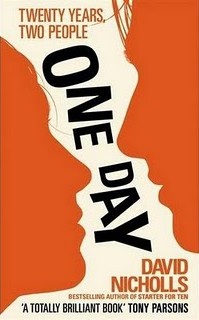
Boy meets girl. Just in the nick of time, they spend one day (and night) together before graduation parts them onto different trajectories- he rocketing into fame and fortune in television as her dreams of writing plummet into an oblivion of greasy quesadillas and congealed chips. Yet on this one summer day, for the next twenty years, their paths will somehow intersect. They’re hardly star-crossed lovers: Dexter is a handsome toff, Emma’s definitely more geek than chic. He can be infuriatingly self-centred, she has an annoying tendency to hide behind self-deprecating humour and bad glasses (at times, it’s hard to believe she’s as beautiful as Dexter sees her). But I think it’s this imperfect mismatch that makes them so true to life- and this book, One Day by David Nicholls, so difficult to put down. Compiled like a photo album, the book is a series of annual snapshots that chart Dexter and Emma’s halting relationship from ambitious youth through to resigned middle age. At times, this device seems a bit like a cop out- the perfect alibi for a patchy plot-and often moments that should be some sort of milestone are suddenly forgotten as the years plough on. For all this frustration, though, Nicholls writes in an unaffected style that is shrewdly observed and very endearing, with just the right amount of cringe. I guarantee that you will laugh. If you are the pathetic type that cried at The Notebook, then you’ll probably shed some tears. Funny, familiar, and just completely addictive- believe the hype, because this really is the perfect holiday read.

Thursday, 11 August 2011

Britain’s Hour


What do The Hour and Mad Men have in common?

No, not some terrible joke, but the question that has repeatedly overshadowed critical commentary on BBC Two’s newsroom drama The Hour. Putting the obvious difference aside-  heady New York advertising world versus post-war BBC television programme- it seems to me the only thing the two shows share in common is an almost pathological attention-to-detail. Like its American “counterpart”, The Hour is ostentatiously stylish. Cinched waists, slim lapels, fedora hats: it actually basks in its own image, smugly aware that even if the script is a bit flat, at least it looks polished, shrewdly slick. Even the HB pencils have been specifically manufactured for the show, exact replicas of the BBC standard-issue pencils of the era. Talk about obsessive. What The Hour does with pencils, Mad Men does with ice cubes (yes, ice cubes), each individual cube lovingly hand-cut one square inch smaller than their chunkier modern-day counterparts. It’s exhausting even to contemplate.

Although I disagree with this rife Mad Men comparison, I think it proves that British drama can still compete with bigger-budget US shows such as The Wire and The Sopranos. Given that the BBC works on a relatively tiny scale, it does well. Yes, The Hour’s pilot episode was a little bit patchy, and at times the script seems flat and unconvincing, but the series is only 6 episodes long. Hardly time to slowly develop complex characters or to build up multiple storylines. British drama cannot indulge in such luxuries like American television. Four episodes in and thankfully the murder plot, political intrigue and clichéd love triangle of The Hour have come together into something that actually resembles plot development, even if the whole thing seems to be hurtling towards the finale at an alarming speed (last week, the Shady Villain sat calmly at a Formica canteen table one moment, the next threw himself suddenly, violently, and perplexingly down a stairwell. Even the actor himself looked a bit confused). The acting is brilliant, too- Romola Garai tackling the role of plucky, principled Bel Rowley with ease; Dominic West, suave and almost fawning, here a far cry from his tough cop act in The Wire; and the ever-brilliant Ben Whishaw playing the maniacal, tenacious journalist with bravado. Even Julian Rhind-Tutt, the infallible Mac from Green Wing, does a small but very good turn as the Prime Minister’s sleazy press secretary. The slogan “Original British Drama” that looms large on the screen before each episode has some merit. Its nationalist pride is intentional, and I believe justified. It may not be quite as splendid as American drama, but The Hour is entertaining and gripping- proof that British drama still has what it takes.