Wednesday, 11 January 2012

Heavenly Hakkasan

Hakkasan, London’s stylish Chinese restaurant, is an express route to food heaven. From the inventively delicate morsels of food to the impeccably stylish service, the entire experience seduces. The food is so good that hours (even days) later, when you’re back at home moodily chewing your own (rubbish) culinary creation, your taste buds can still recreate that magical taste. From memory, they continue to pinpoint every flavour. I mean, it really is that good. From the signature roasted silver cod with champagne and chinese honey to the stir fry Chilean seabass, and the pan-fried wagyu beef to the exquisite lotus and gai-lan stirfry, the menu offers pearl after pearl. And I haven’t even started describing the dim sum yet. For that, the menu is genuinely staggering: parcels of heaven including tender Alaskan snow crab wrapped in crisp fried vermicelli and xo sauce, puff-spiced with cardamom and fennel seed and mooli spring roll with bean curd puff and yam roll to longingly list just a few. Never has dim sum been so sophisticated and original. All the Chinese takeaways you’ve ever consumed (and there are a lot of them) gradually line-up in embarrassment, hanging their greasy heads in shame. For Hakkasan serves Chinese cuisine with a twist of fusion- updated, enhanced, and turned on its head by westernized flavours. It’s by no means authentic Chinese food, but neither is the fare offered by your local takeaway store (yes tourist prawn toast, I’m looking at you). Instead, Hakkasan’s culinary creations are a salute to one of the best-loved cuisines in the world – proof that Chinese food can be just as stylish as its Japanese cousin.
You only need to breathe in the subtly-spiced incense and admire the sleek wooden décor to understand where Hakkasan’s owners are trying to go with their franchise. We ate downstairs, in the Mayfair branch on Bruton Street, a subterranean vault with mellow nightclub lighting and relaxed background music that seemed perfectly calibrated to the restaurant’s insistent chic. Delicately carved lattice screens separate this space into intimate dining areas- ancient China smuggled into the 21st century. The New York nightclub feel is wonderfully reflected in the cocktail menu (what meal is complete without a good drink?) The rose-petal martini was offensively girly (it was served complete with an actual flower, but I don’t care- it was delicious) as is the pink Mao-Mao –a wonderful concoction of watermelon, strawberries, Belvedere vodka, Akashi-tai sake, and strawberry liqueur that was delicious but, unsurprisingly, incredibly pink. One not to try is the curiously-named Sushi Bartender’s Breakfast- that was a rookie error - a meal in itself, it nearly filled me up before the food had even begun. Curiosity killed the cat.
It isn’t difficult to see why the newer, shinier Mayfair branch trumps over its original, older sibling in Hanway Place. I found the staff to be much friendlier, and I always felt the dodgy alleyway entrance to the original Hakkasan behind Tottenham Court Road to be more seedy than it was sexy. In the end, though, both serve the same epicurean delights – meaning that whichever of the two branches you choose, you and your tastebuds will be blown away. Just make sure you can dig deep into your pockets- those who complain about the prices aren’t telling you a lie. But, then again, you will be paying for heavenly quality that won’t disappoint - making Hakkasan a firm favourite amongst those who enjoy an all-round dining treat.

Hakkasan Mayfair on Urbanspoon

Tuesday, 10 January 2012

Life from the Top Deck


Another day, another bus, another long commute. You're lost in fragmented, overlapping thought, waiting impatiently for your everyday journey to end. It’s tiring, this repetitive aspect of your life- each morning punctuated by snapshot moments, fleeting thoughts and anonymous crowds. After a while, each day seems so similar that eventually it all just blurs into one. Now, Top Deck, a photo exhibition that launches this Thursday (12th January) at Downstairs at Mother London, is re-injecting some meaning into this routine aspect of our lives. An inspiring series of photos snapped by photographers Will Robson-Scott and James Pearson-Howes over two years on the top decks of east London’s buses, it redefines the morning commute. By translating commuters’ partial pensive wanderings into a photographic myriad, it captures the singular moments that we no longer notice, or appreciate. Certainly enough to make me think twice about burying my head in the paper. The London-based duo behind Top Deck was partly-inspired by street photographer Tom Wood whose series of photographs “All Zones Off Peak” captured the everyday, repetitive lives of Merseyside commuters. 
Top Deck promises to be just as exciting and empathetic an observation- a reminder that even the most boring moments of our day have the power to astonish. It's a fresh new angle on every morning’s routine monotony. Their work will be on display for two weeks at Mother (London’s hippest ad agency) on East London’s Redchurch street - as well as in a limited edition newspaper publication. So next time you’re doing the daily commute (tomorrow?), just open your eyes and look at the world around you as if through the Top Deck lens- you never know what you might truly see.
Purchase your own limited edition of the Top Deck publication at http://topdeck.bigcartel.com from the 12th of January.


Sunday, 8 January 2012

Bright Young Things


Emerging fashion designers Maarten Van Hoorst, Adam Andrascik and Sorcha O’Raghallaigh are just a few of the stars in the making who have been hand-selected to take part in Selfridge’s 2012 Bright Young Things initiative. The talent-scouting project, which successfully launched in January last year, cultivates budding creative flair- and this year it promises to be an even bigger affair, featuring fifteen British designers from the worlds of fashion, food, art and design. Unveiled on Thursday, the iconic department store has given each promising talent the opportunity to create their own displays in the windows on Oxford Street and Duke Street. From start to finish, they will design their window space- and with over a million people walking past Selfridges each week, it’s the perfect platform to share their artistic vision.The designers will also sell their collections from three temporary pop-up stalls in Selfridge’s flagship store, as well as on-line. The 2012 initiative promises to be a powerful launch pad for these stars to advertise their diverse originality.

We can’t wait for Lady Gaga favourite Sorcha O'Raghallaigh to unveil her wacky window craft and to see Fashion East’s very own Maarten Van Horst's bold creation. Other names include menswear designer Shaun Samson, artists and interior designers Tinker & Tailor, accessories designer Olivia Ruuger, and coffee roaster Jack Coleman. So if you’re looking to be inspired, then why make Selfridges your next stop. With the initiative running till the end of February- and one of the Duke Street windows displaying the work of seven designers from The University of the Arts prestigious Future Map programme- London’s famous department store promises to be the exciting hub for London’s artistic scene as we enter 2012.

Saturday, 7 January 2012

Escape to Berlin


Berlin is not your average capital city. Unlike Paris, it cannot claim to be pretty (its gritty history has made sure of that); unlike London, it doesn’t boast a famous skyline; and for a country as economically wealthy as Germany, it’s surprisingly derelict. Yet you can’t help but fall for its esoteric edge- its surreptitious charm that’s somehow stylishly unrefined. After all, this city is a relic of modern day history- the once divided symbol of a once divided Europe. A political and historical icon. Hours are easily spent wandering the capital’s many museums and memorials, locked in its grim yet fascinating history. In many ways, it will always be haunted by the ghosts of its past- but it’s also avant garde, heroically fighting to move on. You can see it in the way an abandoned spy base has become a hippie squat, an underground venue for the latest warehouse rave, an exhibition for political graffiti. A very cool set-up- proving that Berliners can, and will, write over this captivating yet brutal history. Never forgetting but constantly forging ahead.  Or the East Side Gallery: a stretch of the Berlin Wall dedicated to artistic messages of freedom and hope. History’s symbolic meeting point converted into an open-air gallery- reflecting man’s ability to create, destroy and preserve. Granting the Wall a new face in a new era.  


But if you think that this is a city famous simply for its past, then think again. Today, it’s a trailblazer- excelling in everything from music to art with an underground vibe. In particular, Berlin-born fashion is known for its radical and exciting designs, and the city bustles with great vintage shops. For a good rummage, check out Colours on Bergmannstrasse 102, most probably Berlin’s biggest vintage store, all obsessively organised by colour (the manager definitely looked OCD). Of course, there is a very fine line between vintage gems and second-hand crap, so this is best if you have a generous dose of time and patience. But with happy hour every Tuesday from 11 till 3 (where everything is 30% off), it’s well worth the visit for the off-chance bargain. Superficial, on Torstrasse, was also really fun- stocking print t-shirts and great jewellery pieces. And if those two aren’t enough, why not wander down Rosenthalerstrasse? Filled to the brim with unnamed concept stores, it’s an intriguing walk. Plus, you'll end up in Hackesher Markert- a pretty market square surrounded by bars and cafes where you can unwind, obligatory glass of wine in hand. 

Berlin proves that even fashion can comfortably sit side-by-side with the tragic iniquity of its history. Bright courageous ideas dazzle against the darkness of its past. I saw in New Years Eve atop a hill in the city, marvelling at the skyline that was alight with fireworks- the explosion of firecrackers echoing in the air. Restless and energetic, I realised Berlin itself is a little firecracker. It was clear to see that this is a city that knows how to have fun, defiantly accepting the burden of its past with flair and its own raffish style. Whatever your interest, there is always something happening in Berlin. It's the ultimate city escape.

Thursday, 29 December 2011

A tough nut to crack


Every little girl dreams of being the Sugar Plum Fairy. Amidst the complex tale of The Nutcracker, she embodies magic: a beautiful ballerina who glistens like freshly-fallen snow and wins the heart of the handsome Prince. The challenge with this quintessential ballet is how to make it stand out from a crowd of Nutcracker pasts. Besides the enchanting Tchaikovsky score and headache of a plot, the rest is pure, artistic licence. But Wayne Eagling, the Artistic Director of the English National Ballet’s Nutcracker, well, his imagination nearly misses the point. It is Clara’s adolescent dream of first love- the charm of the Sugar Plum Fairy- which becomes the kernel of his production. But, in stripping away the intricate wrappings of the story, he has tried to be too clever- and the result is a darkly sinister spin which bewilders the audience and dulls the magic. The ballet’s pivotal transformation scenes become laboured and muddled, particularly the moment when Clara dreams herself into the Sugar Plum Fairy who dances with her dashing Prince. The tale itself is already a myriad of toys and magic, dream and reality- and Eagling loses the plot, the Nutcracker darkly morphing into Drosselmeyer’s handsome nephew and back again, a few too many times. The battle scene between the Mouse King and the tin soldiers also lacks wattage - yes, the giant mousetrap moment made us all laugh, but the choreography was too much movement and not nearly enough panache. It’s too apocalyptic, set against ugly brown walls- lacking the colour and charm that would have it compete with other productions.
But with artistic licence comes the need for subjectivity. And, at moments, you can see why Eagling’s darker, more traditional take on this much-loved classic shines. Act One’s Christmas party is enchantingly staged by Peter Farmer, simply presided over by a giant Christmas tree (which later will be conjured into a supersized forest pine). The party guests even arrive at the dark Edwardian house on ice-skates, a bit of gliding theatrical magic on a frozen Thames. Magic is also retained in the exquisite costumes (oh those glittering Swarovski diamonds in the Dance of the Snowflakes) and who isn’t mesmerised by a giant hot air balloon that lifts Clara and the Nutcracker Prince to the Land of Sweets? Against the flurry of snowflakes, it’s irresistibly festive. In the end, every Nutcracker hinges on the choreographic chemistry of the lead couple in the final pas de deux. We caught the cast with Elena Glurjidze and Fabian Reimair, who danced with an exquisite magic that left the darker, more bemused elements of the production buried in snow- and ensured that the Sugar Plum Fairy remains every little girl’s Christmas wish. 

Friday, 23 December 2011

Noises Off, Laughter On


Last night, I laughed. Proper hysterical laughter that worked my stomach muscles and made my mascara run. It was not my intention to giggle so hard, but the farcical comedy “Noises Off” at the Old Vic exceeded all expectations- and redefined the term side-splitting. Written by Michael Frayn, the play’s core concept is clever: a play within a play seen first from the front, then from backstage, and then the front again- as a touring theatre company muddle their way through frantic rehearsals to a terrible first night - and an even worse final performance. In the first act, we witness the shambolic dress rehearsal of the play within a play, “Nothing On”, as the cast fumble their entrances, their exits....and their lines. From the word go, it’s mayhem: a dizzy blur of sardines and fake sheiks, banging doors and backstage affairs. But you can’t help admire how controlled this mayhem must be. The comic timing was absolutely spot on- and the brilliance of it is any genuine mistakes just add to the chaotic comedy value. The second act reverses our viewpoint- and now we see the hectic, hilarious commotion backstage on the play’s opening night. Blossoming rehearsal romances from Act One now descend into public performances of petty rivalry and lovers’ spats. This repeated gag is nothing short of hysterical- culminating as the play’s female lead (played by a brilliant Celia Imrie) attempts to get her revenge by tying her lover’s shoelaces together. As he is hilariously forced to jump up the stairs as if on an invisible pogo stick, it would have been fair to say that the entire audience laughed out loud. At full-throttle momentum, the action then switches again- and the chaos of the play’s opening night is now repeated from the front. Cue yet even more disaster, tantrums, and cringe. It’s fun viewing- pure, perfected bedlam. Of course, dramatic irony functions overtime throughout - and, in this sense, the Fawlty Towers-esque music is entirely befitting. The play is riotous and ridiculous - a wonderful throwback to comedy in a truly British sense- farcical, chaotic, and universally appealing. “Noises Off” may be inspired by the stage direction indicating the noises offstage, but last night the entire theatre certainly rang loud with the raucous sound of laughter. With “One Man, Two Guvnors” booked up until mid-Feb, don’t hang around- it’s fairly obvious which ticket will be the next hottest in town.

Wednesday, 21 December 2011

From Russia with Love


On paper, it seems a disastrous premise: an English-Russian restaurant attempting to combine the most ‘luxurious’ dishes from two of the world’s worst possible cuisines. Cue nauseating memories of questionably lumpy school dinners, from pie and stroganoff to casseroles and dumplings. But Bob Bob Ricard, the retro Anglo-Russo brasserie, situated on Upper James Street in the beating heart of Soho, defiantly shows a gloved finger to such preconceptions. From the moment we were ushered through the door, it felt like a guilty pleasure, a naughty treat as fun as its bouncy name suggests- from the sparkly pink Christmas tree by the entrance to the green leather booth seating throughout. It felt like dining on Agatha Christie's Orient Express: combining art nouveau decor, polished brass and antique portraits, with elegant but in-your-face service (it took at least three waiters to help take our coats). We arrived without a reservation, so ended up dining at the bar- recommended if you like your cocktails shaken with a little conversation. Order the rhubarb gin and tonic- it isn't the signature cocktail for nothing. The most eccentric part of the whole shebang is the menu: a colourful, eclectic range of dishes that encompasses all the English and Russian classics (hello chicken pie and Bob’s chicken kiev) and adds in some oysters, caviar and jellied ox tongue for decadent measure. I paired an unusual starter- a Russian salad vodka shot with shavings of black truffle (surprisingly good, if a little too rich)-  with a cautious main course of eggs royale with smoked salmon (delicious, but not fancy enough given the price tag). After all, when hungry you can never be too risky. Thankfully, we can also recommend the truffled potato and mushroom vareniki (basically dumplings) - a relief considering we had no idea what it would be. Verdict? The menu can be a bit of a stab in the dark if you want to shy away from borsch and burgers and, in typical eastern European style, everything is perhaps too decadent- upmarket trash palpably demonstrated by the champagne button at each table. And Bob Bob Ricard itself is just a ridiculous name. But the secret is to just embrace it. This is more than just dining- it’s a step back into nostalgia: the golden glamour of elegant waiters in faded pink jackets and white gloves attending to your every need, champagne literally a button away. It's deliberately overly-done, outlandish with intent. And in a city dominated by tedious restaurant chains and fast food joints, Bob Bob Ricard’s kitsch personality is wholly refreshing. 

Bob Bob Ricard on Urbanspoon

Monday, 12 December 2011

Rolling out of Roka


Three months of endless tapas in Salamanca was fun, but after a while the taste buds yearn for something that doesn’t involve chorizo. Okay, so that’s a little exaggerated, but still- in a city that doesn’t even do a decent curry takeaway, this was a somewhat challenging period for my adventurous appetite. No surprises, then, that I couldn’t wait to eat some sushi upon my return to London. And what better restaurant to jump back into the city’s great metropolitan eating than Roka, home to exquisite contemporary Japanese cuisine. Zuma’s little sister on Charlotte Street (there’s also another one in Canary Wharf) serves up the same menu at a slightly more affordable price (don’t be fooled- the menu prices are still a little eyewatering). The restaurant’s centrepiece- a huge robata grill- plainly visible from outside through the floor-to-ceiling glass windows- divulges the promise of a great culinary experience. To kickstart the evening, we sampled their cocktail menu downstairs in the Shochu lounge bar- the pear suppai, in particular, is worth ordering for its powerful, fresh taste. Our appetites perfectly whetted, we wondered upstairs for dinner, holding our breath in greedy anticipation. Just like the restaurant itself, the focal point of the menu is the robata grill- trust us and order the grilled black cod marinated in yuzu miso: each flake of this beautifully cooked cod is a wonder to behold. The softshell crab maki roll, alongside the yellowtail tuna sashimi with truffle yuzu sauce, is also another dish worth trying- magic in your mouth. We ate our bodyweight in sushi and then (maki) rolled our way back downstairs to the bar, where a cocktail bizarrely named “Lawnmower” more than adequately rounded off the evening. Zuma may attract all the stars, but Roka proves that all little sisters learn from the best. 


Roka on Urbanspoon

Sunday, 11 December 2011

It’s beginning to look a lot like Christmas


A crisp December morning- and the candied aroma of Christmas pudding is swimming about me in the kitchen.

“There’s something about baking a Christmas pudding that always gets me in the festive mood”, remarks my mother, merrily whipping a magical-smelling cake batter. “I’m feeling quite heady”.

“You mean you’re getting drunk vicariously through a cake”, I cynically respond through a mouthful of Special K. After all, it’s 10am on a chilly Sunday morning and I’ve only just dragged myself out my warm, cosy bed.

“Well, I’m breathing in the lovely fumes of alcohol-infused fruit and it must be quite strong”, she frowns- whisking her own fingers in the process. Definitely too much sherry.

This is my mother’s December tradition- and it never fails to put her in the festive spirit. Five alcoholic puddings later (we go big at Christmas), carols in the background, and having nearly cried at the legendary Mr Attenborough’s Wonderful World video on You Tube- anyone would think it’s Christmas Day.
So, I decided that it was high time I went in search of London’s festive feeling.

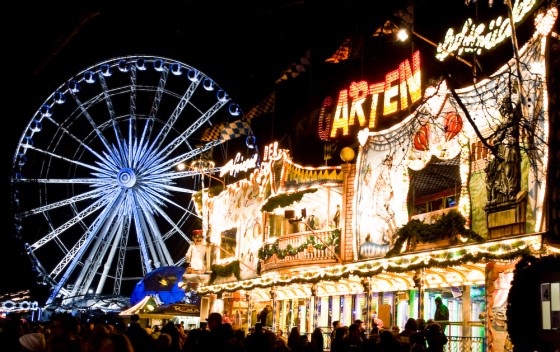
My first stop? Hyde Park’s Winter Wonderland. Shamelessly seasonal, but enchanting nevertheless, this is guaranteed to put you in the Christmas mood. From an ice rink to a giant observational wheel (think small-scale, rickety version of the London Eye- but with views that are just as breathtaking), two circuses to crowded German Christmas markets, Hyde Park delivers exactly what it says on the tin: a land of wonder. It’s undeniably busy, and the queues are offensively long, but sneak round the back towards the Serpentine Café and you’ll find another gate. The talking tree here really is quite annoying (it repeatedly tells terrible jokes featuring polar bears and gin & tonic), but it’s worth it to avoid the main queue and enjoy the park's atmospheric feel. Besides, the smell of mulled wine should be enough to keep you enticed.

If this doesn’t float your boat, then celebrate Christmas at Covent Garden with its beautiful supersized decorations, animated nativity scenes, and Dickensian carol singers. As busy as Hyde Park, it at least boasts a more sophisticated feel and, best of all, you can pet reindeers (who cares if it’s meant for the kids? Move aside and let me through). Finally, if you want to escape Oxford Street’s tourist bubble and admire some beautiful Christmas lights, then why not head to St Christopher’s Place and feast your eyes on its dreamily reflective baubles, or wander through the sparkling arches on South Molton Street. It’s almost as festive as a slice of Christmas cake, and much less calorific. 

For those who sensibly want to stay warm: just stick on some carols and dance around the tree. Nobody will judge you. 


Sunday, 27 November 2011

Food for Thought


Sometimes size does matter. The risk of tapas tasting is that these tiny dishes are designed to amuse the appetite, to tempt but not to overindulge. It’s perfectly easy to order dish after dish because they’re small- and, after all, what damage could just one more tiny tapas really do? A fatal question, and one we’ve learned to ignore as we continue to follow the tapas trail. Here’s the second instalment of our little hunt for Salamanca’s best tapas bars: the highs, the lows, and the places to categorically avoid.

Recently, our taste buds have directed our tapas trail down an adventurous, if somewhat dodgy, route. Sure, eating the touchstone tapas dishes makes for a good evening, but we wanted to sample something a bit different. Tail of a bull, intestines, pig ear or pig face: you name it and I guarantee we’d prepared our (poor) palates to give it a go. It’s not necessarily a normal pastime of ours, this desire to indulge in speciality dishes, but as I always say: you cannot claim to dislike something until you’ve tried it once. Step up Bar Cilleros- a tapas bar recommended to us for its slightly unorthodox menu. Beforehand, I’d secretly lined my stomach with a sandwich, but turns out this was a futile effort: not only was the bar dark and dingy, but the tapas selection was extremely tame. The strangest dish on offer was ox tongue, which of course we promptly ordered. I didn’t mind the texture (yes, it was slightly chewy) but its sauce left a lot to be desired. Across the road, we investigated Felipe II, a bar packed with locals but not with decent tapas choice. Many of the dishes had already run out by 10pm- very disappointing, especially for Spain. In the end, we braved the intestines. How were they, you ask? Imagine something jellied and slightly crunchy, cover it in a questionable tomato-based sauce, and then make it lukewarm. No, I’m not entirely sure if I would order them again.

Still peckish, our tapas route continued down Paseo de Canelejas to La Meson de la Cocina Charra. Frequented by locals and students alike, this bar has a lovely welcoming atmosphere, and its choice of tapas is wonderful, too. The menu features a great selection of tostas (my favourite is with smoked salmon and cream cheese) and, if you’re particularly hungry, ask for the bocadillo with tortilla francesa- the best sandwich ever. We often eat here, and being good friends with the owner definitely helps. Ask Bobby to make you his special sangria, I promise it will lead to a good night. Next door, El Globo made a culinary impact for all the wrong reasons. Innocently sitting by the bar, the waiter suddenly gave us both a cup of caldo on-the-house. Traditionally a soup broth made from boiled jamon bones and vegetables, caldo is a speciality in Spain. This caldo, however, was essentially a cup of fat- made even worse when the waiter poured in white wine. Verdict: not a place we’d visit again, and if we did, we’re definitely not sitting anywhere near the bar.

Heading towards Plaza Mayor, Casa de las Morcillas is good for those who like (surprise, surprise) morcilla. We had an enormous platter of various different types: deliciously rich but incredibly filling, and definitely one to share. Our favourite was the morcilla de Burgos, made with rice and onions. Meanwhile, Van Dyck appears to have gone out of style with the Salamantinos; instead, Casa Paca’s tapas bar on Calle San Justo appears to be the locals’ new favourite haunt. It pays to get here early (by early, I mean around 9pm): we went on a Friday night and it was standing room only. The range of tapas here is fantastic, and the kitchen just kept churning out delectable dishes. Our favourites include the creamy paella, the crispy calamari, and the tosta with morcilla, foie gras and jamón iberico- each an epicurean masterpiece. Next door, Casa Paca also has an elegant restaurant for proper, sit-down dinners. The soups here are particularly worth a mention, as was the full-bodied cuchinillo asado (roast pork). A word of warning, though: steer clear of the fish, especially the grilled seabass. Mine smelt like it had walked to the restaurant.  

The sheer amount of discarded napkins on the floor of Casa Paca's bar suggests I am not alone when I highly recommend it. This little city is full to the brim with great tapas bars, but you really can’t beat this one for its sublime flavours and authentic ambience. A true taste of Spain, our verdict is make this your stomach’s first stop if you’re ever in Salamanca.

Sunday, 20 November 2011

Treading the Tapas Trail

Living in Spain can hardly be called the real deal if you have not participated in at least one night of tapas crawling. After all, what could be better than the odd evening of itinerant gluttony, richly accompanied by good conversation and (just a few) glasses of wine? With that in mind, we have decided to investigate the tapas circuit in Salamanca, visiting numerous tapas bars to discover every secret speciality, the culinary forte each proudly has to offer. It’s taxing, this marathon tapas fest around the city, but somebody has to do it, and we’re only too happy to nominate ourselves for the challenge. Here’s the opening instalment of our self-invented tapas journey.

To begin- Calle Van Dyck. Once the popular street for tapas in Salamanca, frequented by locals and tourists alike, now it seems that the quality has sadly travelled elsewhere. Many of the recommended tapas bars didn’t merit another visit- cafeteria types with little atmosphere and even less choice on the menu. However, if you do head here, La Goleta should definitely be your first stop. A cosy yet classy tapas bar, I would recommend its generous tosta menu- particularly with morcilla (black pudding chorizo), and with gambas (prawns lighly tossed in garlic and olive oil). You couldn’t possibly go wrong when each tosta is served with a free glass of their crisp house white. The service, too, is warm and welcoming- and we were even given a few tostas on-the-house (most probably because we showed an embarrassing enthusiasm for the menu...I highly recommend giving it a go). Still hungry, our next discovery was La Degustación- another gem amongst Calle Van Dyck’s abundant tapas bars. With old wine barrels serving as tables, this place was delightful, and the tapas was good too. Given the bar’s name, it was no surprise that the menu offered a huge range of pinchos to taste- and at 1.50 per dish, it exhausted our willpower not to sample everything. Lastly, you should make Van Dyck itself your final stop of the night- a bar dedicated to Mexican dishes such as enchiladas, tacos and quesadillas- and serving potent cocktails to boot.

Next up: Plaza Mayor, the heart of the city with plenty of tapas bars on its doorstep. Overlooking the Plaza itself, there are two impressive tapas bars, both owned by the same family, which we would visit again. El Reloj has its charm, with its antique wooden door and majestic chandelier, buzzing with customers of all ages (on Calle Van Dyck, they bizarrely often seem to be old men). Come here and order the huevo revuelto- a simple gastronomic delight. Its sister bar, Plaza 23, is just a mere few steps away- perfect to maximise on eating time. Just trust me and ask for their tosta with morcilla, chèvre and caramelised onion: two mouthfuls of heaven. We’d go back just for that one dish. Upstairs is a chic restaurant that boasts a beautiful view of Plaza Mayor, especially at night- perfect for a special dinner (although vegetarians should perhaps steer clear: the menu is essentially just meat). Both the tapas and the restaurant are more expensive than the average Salamancan restaurant, but it's definitely worth it for both the location and the quality.

Venturing beyond Plaza Mayor, another day we decided to brave a few discreetly-located tapas bars. We’d heard good things about La Galatea, an undiscerning bar that I otherwise would probably have walked straight past. At lunchtime, it was completely empty- but luckily we ignored this warning sign, as the delicious jamón iberico and manchego cheese were both sliced to perfection. However, the exotic tapas menu somewhat betrayed the bar’s authenticity. Kangaroo with rose petals and ostrich in a poppy and grape sauce (yes, I thought my Spanish had failed me too) may be aimed at those with a more daring taste, but they hardly count as true Spanish tapas. Just opposite on Calle Doctrinos, we hit upon Doctrinos, a wonderful tapas bar that I would highly recommend. Although poorly located, the owner here really knows his stuff. With legs of jamon iberico suspended from the ceiling, numerous red wines on display and regulars enjoying quiet conversations at the bar, Doctrinos had a lovely ambience- and the tapas was perhaps the best we had tried. Ridiculously cheap, too- at merely 80 cents per tosta, you can forgive us for going a little bit overboard when we ordered. Just when I thought I couldn’t possibly manage another bite, a tosta with beautifully sliced lomo arrived. And I managed two bites. Clearly, this tapas circuit should always be complemented by frequent exercise (and I don’t just mean walking between each bar).

One way of judging the popularity of Spanish tapas bars is by scanning the floor- more discarded napkins under the bar (as tapas etiquette begs) endorses the bar’s reputation. Of all the tapas bars I’ve mentioned here, Doctrinos was the most dirty, and therefore (illogically) the one I would most highly recommend. For now, a well-deserved break before we continue eating our way around Salamanca. After all, there’s a reason why Spain is also known for the siesta... 

Tuesday, 8 November 2011

Shedding the Skin I Live In


In the cinema, we always hope to be creatively engaged in some way- to be pushed beyond the limits of our imagination, to see things afresh and, most of all, to be entertained. Of course, the measure of a good film is entirely subjective- even my criteria for cinema’s purpose itself is wide open to interpretation. Yet ever since first seeing Tacones Lejanos and Hable con Ella, I have been fixated by Spanish director Pedro Almodóvar’s ability to open our eyes- to expose the madness behind love, the anxiety of identity, the silence behind loneliness. Masterpieces in Spanish cinema, these films are startlingly human, revealing a director with a keenly tender eye. His latest outing, La Piel Que Habito (The Skin I Live In), marks a return to this human lyricism, only this time disguised as a haunting story of revenge- a horror film without the gore, blood or the screams yet no less disturbing. Loosely based on Thierry Jonquet’s Kafkaesque novel Tarantula, the film tells the story of manic Doctor Ledgard’s obsession with revenge. Creating a synthetic second skin for Vera, a mysterious woman imprisoned on his estate, he redefines her identity- one that holds her captive against her will. As the film shifts between present and past, Ledgard’s motives are eerily revealed- let’s just say Ledgard is not necessarily the story’s only villain, and Vera is not all who she seems. She holds the key to his obsession, and even though the plot twist was all too obvious (even to us, watching the film in its original rapid Spanish without subtitles) this did not prevent it from packing a real psychological punch. The house is a prison, one that incarcerated not only Vera but the audience as well, locking us into a thrilling world of unnerving macabre. Almodóvar beautifully treats Vera’s patient struggle to reclaim her identity- whilst his leads Antonio Banderas and Elena Anaya impress as the possessed surgeon and his enigmatic human guinea pig. Be prepared: I found the first half an hour was torturous viewing (as usual, Almodóvar really goes in for the brutal, weird sex scenes...) After this, however, it is impossible to tear your eyes away, even when you want to. It may not be for the fainthearted, nor for those just looking for a gratuitous Hollywood blockbuster, but this film is definitely worth a watch. A visual feast, stamped with all the trademark Almodóvar fixations of murder, betrayal and sexual anxiety, my verdict is don’t miss it.